May in Chiang Dao offers a unique opportunity for bird photographers seeking more than just species records. This is a month of behaviour, colour, and storytelling.
While the migration season is coming to an end, May marks the beginning of something equally rewarding—breeding activity, feeding behaviour, and interactions with seasonal flowers.
If you understand the timing and habitat, May can be surprisingly productive.
Why May is Special for Bird Photography
Unlike peak migration months, May is less about rarity and more about capturing natural behaviour.
- Birds are highly active during the breeding season
- Increased chances of observing feeding and nesting behaviour
- Many species visit flowering trees and forest edges
- Soft green backgrounds appear after early seasonal rains
This makes May ideal for photographers who want more than just record shots.
Target Birds in May (Chiang Dao)
Here are some of the most rewarding species to focus on during this period:
Blyth’s Paradise-Flycatcher
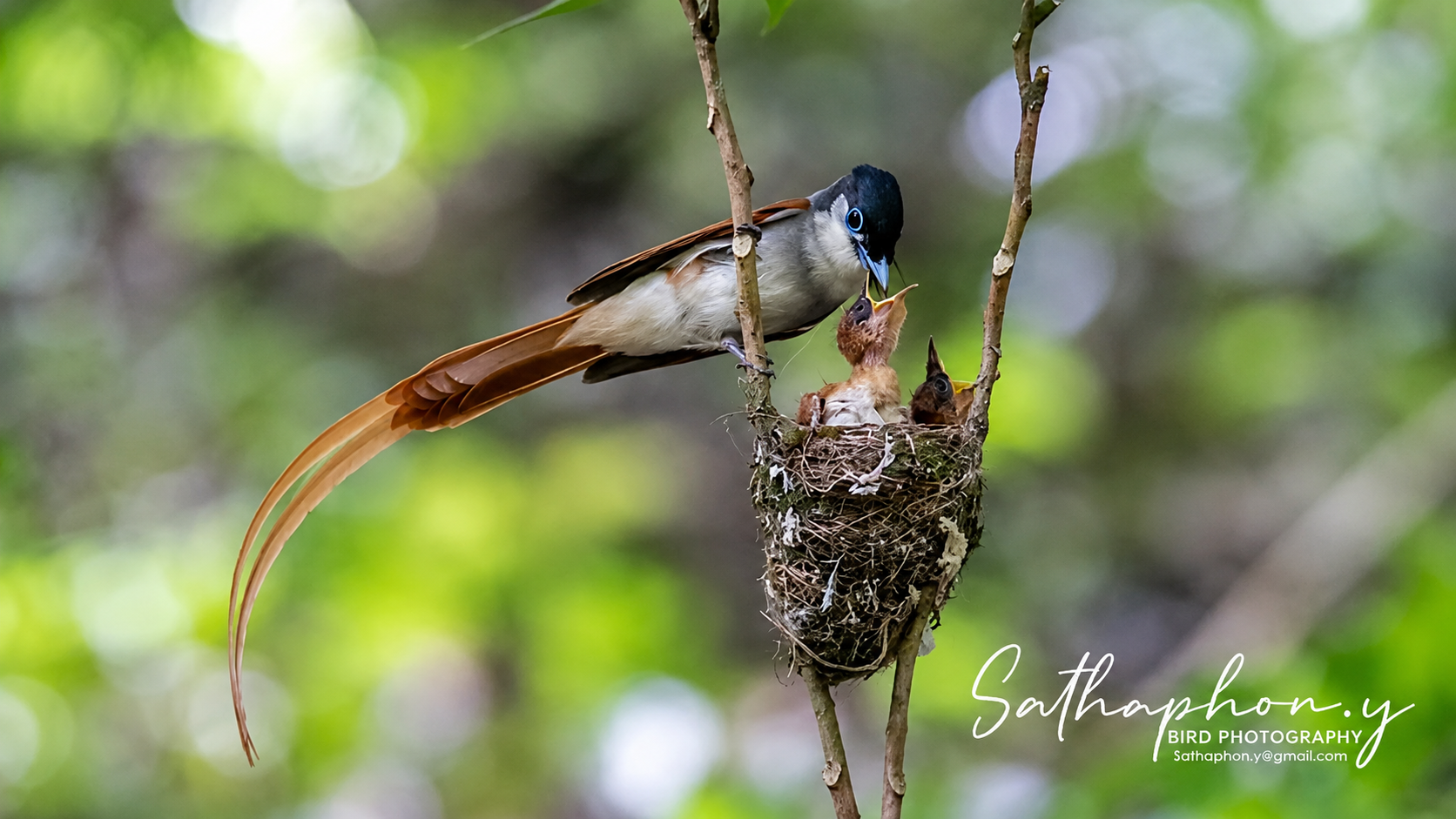
As early as March, the Asian Paradise Flycatcher begins to show pairing behaviour, signalling the start of the breeding season. By April, nesting activity develops, continuing into May when feeding and parental care become more active—offering excellent opportunities for behavioural photography.
Understanding the Conditions
Bird activity in May depends on several key factors:
- Weather changes (early monsoon patterns)
- Flowering cycles
- Food availability
May is a transitional month—from the dry season into the rainy season.
During this time, humidity rises, vegetation becomes greener, and light conditions begin to shift—all of which directly influence bird behaviour.
👉 This means:
Bird movement and behaviour can change from day to day.
Wild birds are unpredictable, especially during seasonal transitions. Flexibility is essential.